
Choosing Skis by Run Colour: Which Skis for Green, Blue, Red and Black Runs?
HemenKayak Ekibi · 01.11.2026 17:37
Summary: On green and blue runs, soft, short skis with a narrow waist make turning easier. Red runs call for stiffer carving or all-mountain skis that hold an edge. On black runs, a stiff flex, sharp edges and your own technique decide. Choose your level accurately when you book: the shop prepares your equipment and binding setting from that. When you talk to the shop, give the hardest run you can ski comfortably, not the one you'd like to try.
Which skis you should rent starts with where you'll ski. This guide explains what run colours mean in Turkey and which skis suit each one.
What do run colours mean in Turkey?
Turkish resorts use the European system, which differs a little from North America's green circle, blue square and black diamond:
| Colour | Level | What to expect |
|---|---|---|
| Green | Beginner | Wide, open, gentle areas |
| Blue | Easy | Usually groomed, gradient normally under 25% |
| Red | Intermediate | Steeper or narrower than blue, gradient normally under 40% |
| Black | Advanced | From slightly harder than red to very steep, may be ungroomed |
European ratings aren't based on gradient alone. Width, rocks and side slope count too, so a red at one resort can be harder than a red at another.
Three things that set skis apart
- Flex: soft skis forgive mistakes, stiff skis are steadier at speed.
- Waist width: a narrow waist (68-75 mm) switches edges quickly on groomed runs. A wide waist (100 mm and above) floats in deep snow.
- Turn radius: a short radius (11-14 m) gives quick, tight turns. A long radius (17-25 m) gives wide, stable turns at speed.
Which skis for which run?
| Run | Ski type | Flex | Waist | Length |
|---|---|---|---|---|
| Green | Beginner ski | Soft | Narrow | Between chin and nose |
| Blue | Beginner or soft all-mountain | Soft to medium | Narrow to medium | Between chin and nose |
| Red | Carving or all-mountain | Medium to stiff | 68-95 mm | Based on level and weight, longer than beginner |
| Black | Performance carving or all-mountain | Stiff | Depends on snow | Based on level and weight |
Green and blue: the goal is learning to turn, not speed. A soft, short ski doesn't punish small mistakes.
Red: once you're moving from snowplough to parallel turns, the edge has to grip as the slope steepens. A slightly stiffer, well-tuned carving or all-mountain ski adds control, especially on icy mornings.
Black: technique matters more than the ski. You need a stiff flex, sharp edges and a radius that suits your speed. Ski your first black with an instructor.
What to tell the rental shop
- The hardest run you're comfortable on, not the one you hope to try. "Comfortable on blue, trying red" is clear.
- Don't overstate your level. The binding (DIN) setting depends on it.
- Your real weight and height. Ski length and binding setting are calculated from them.
- Moving up a level? Ask the shop about swapping to a higher-level ski on the day you move from blue to red.
On HemenKayak, choose your level when you book and the shop prepares your equipment accordingly. You can book ahead for future dates even before the season opens.
Frequently asked questions
What do ski run colours mean in Turkey?
Green is beginner, blue easy, red intermediate and black advanced. In the European system blue runs are normally under 25% gradient and reds under 40%. Black runs range from slightly harder than red to very steep.
What skis should a beginner rent?
A soft, short beginner ski with a narrow waist, reaching between your chin and nose when stood on end. It makes turning easier and forgives mistakes.
What is the difference between carving and all-mountain skis?
Carving skis have a narrow waist (68-75 mm) for fast, sharp turns on groomed runs. All-mountain skis are wider (80-95 mm) and handle both groomed runs and mixed snow.
Sources
- Piste, Wikipedia, European run classification, checked 30 October 2026
- HemenKayak guides on ski geometry and bindings (Turkish)
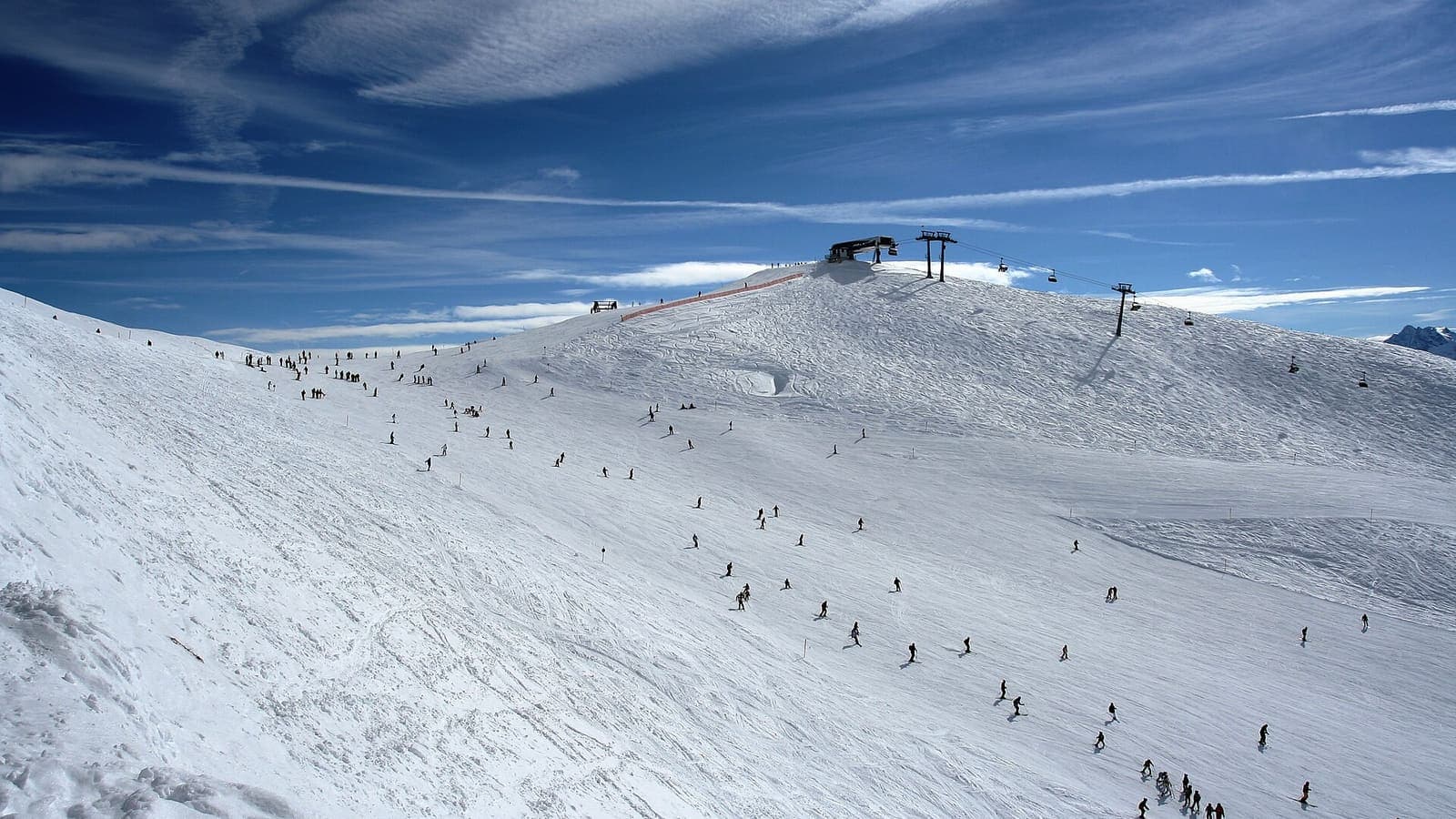
Photo: che (Please credit as "Petr Novák, Wikipedia" in case you use this outside Wikimedia projects.), CC BY-SA 2.5, Wikimedia Commons
Last updated: 8 November 2026
Rent your gear in advance
Compare daily prices from verified shops and have your gear prepared to your measurements before you arrive.
Read next

This guide was prepared by the HemenKayak team. See our About page to learn more about our platform.